Understanding the Informed SLP pay dataset
We collect SLP wage data, so you can be better informed. Share your wages too!
You can find tons and tons of information about SLP pay online. And most of it is wrong . The running joke among SLPs that nobody know what we're actually paid, so we're constantly highlighted on "top jobs" lists without a single person consulting an SLP. (It's one of those funny-not-funny things, because inaccurate SLP wage data also effects policy, but we'll save that soapbox for other articles.)
For now, you're here to understand our dataset! Here's what we have for you:
Analyses and description of our dataset, updated August 26th, 2026:
As of August 26th, 2026, 1008 of you have provided us with your wage data, which has been incorporated into SLP Pay page. Below are some select analyses and graphs that you may find useful:
- Average SLP hourly pay is $48.
- The 1099 average is $61.
- The W2 average is $47.
- Average annual pay if you’re salaried = $78,593
- Note: This combines contracts, and includes people who work 30 hours per week with those working 40 hours per week, and people working 9 months in a year with those working 12. This is why we also include hourly rates in the dataset.
- Part-time SLPs make higher hourly wages than full-time:
- Part-time/PRN: $53.58/hr (194 respondents)
- Full-time: $46.92/hr (765 respondents)
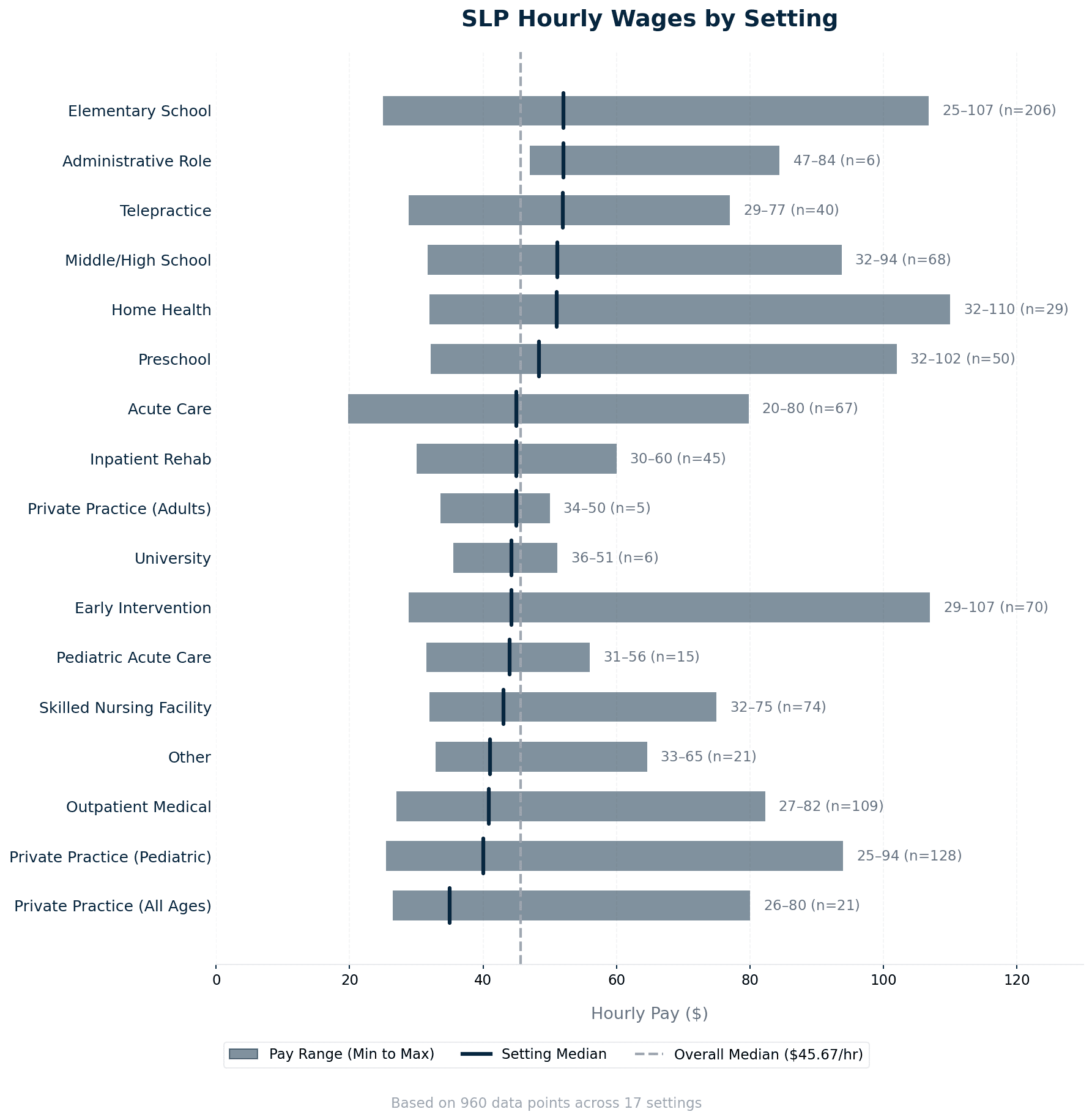
Wages by setting:
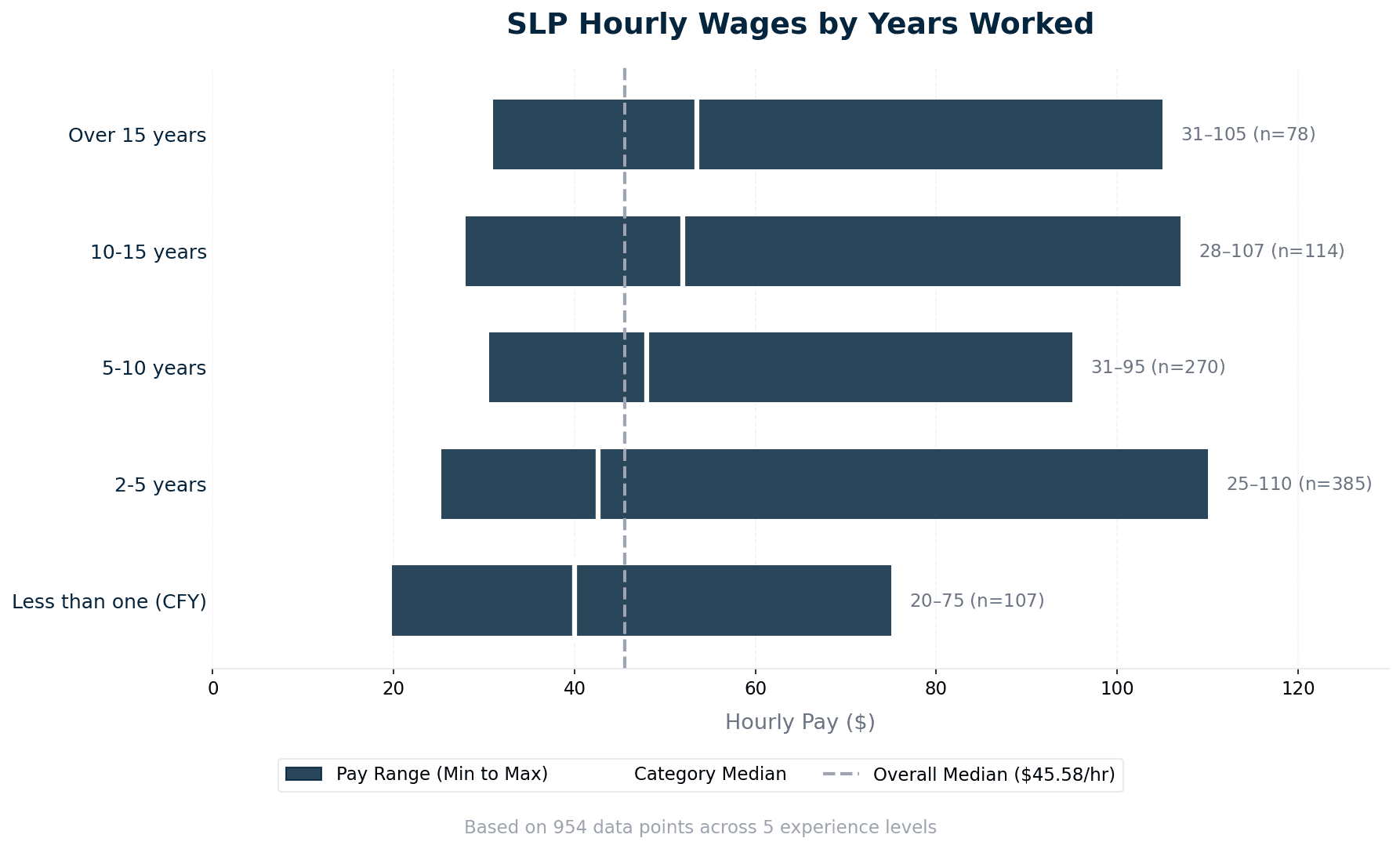
Wages by years worked:
Wages by location:
While we can’t chart pay by city or zip code (yet!) because our dataset isn’t large enough, we can chart hourly pay by Cost of Living Index (COLI). First Google your cost of living index, then compare it to this chart:
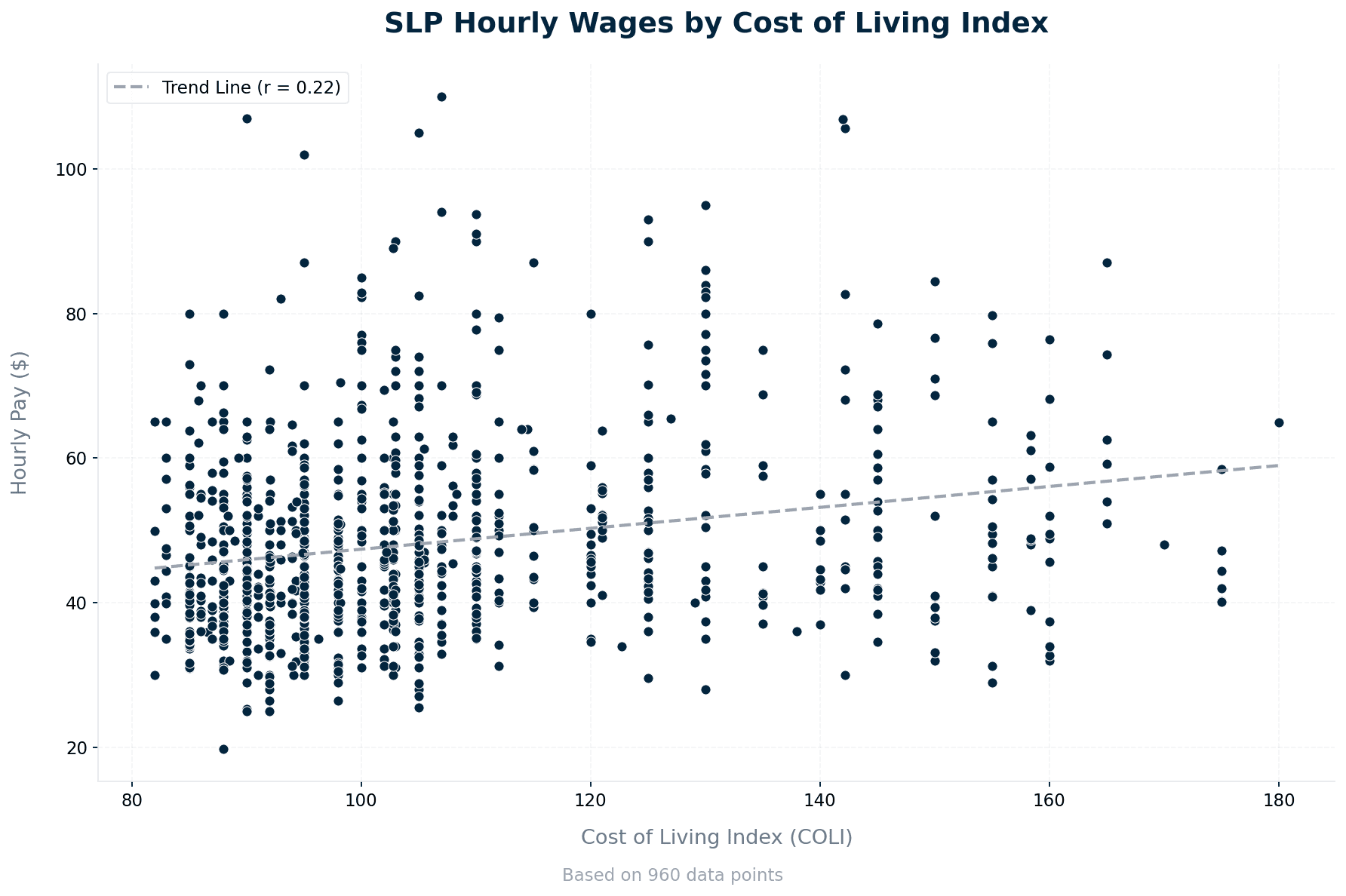
You'll see that there’s only a slight positive relationship between COLI and hourly pay. This suggests that cost of living has minimal influence on SLP pay — factors like setting, years of experience, and employment type likely matter much more.
Starting to feel like this wage data would be much more useful with finer levels of detail? Agreed! The higher our numbers, the better analyses we can run. Share your wages here so we can continue to run deeper analyses.
Benefits and stipends:
92% of SLPs are employees (W2), and 8% are contractors (1099). Read more here on why that matters. Interestingly, this is a much higher rate of W2s than we see in our own jobs database. 1099 positions seem to be open more often.
Those of you who have W2 roles are eligible for benefits and stipends. Here’s what’s common to receive:
- 85% receive health insurance
- 76% have PTO
- 78% have 401K plans or other retirement plans
And for part-timers,
- 14% receive health insurance
- 18% have PTO
- 32% have 401K plans or other retirement plans
And 28% of part-time workers receive no benefits, while only 2% of full-time workers receive no benefits.
Here's a graph of those full-time employee benefits:

Note that CE and therapy reimbursements above include those who receive stipends for these, as well. We were actually really happy to see continuing education being reimbursed for 48% of you, and therapy materials for 29%! Remember—contractors (1099) can’t be reimbursed for any of these things.
Other details not included in this graph:
- 13% of SLPs get their CCCs paid for
- Many receive stipends as well. The average dollar value of stipends = $2127. However, five people receive over $7,000 in stipends annually!
- Note that negotiating stipends can sometimes be easier than negotiating your hourly rate or salary. Think about what you have to pay for out of pocket, or why you deserve significantly higher pay than average, then request it as a stipend!
Now what?
1) Share your wage data here. Our dataset is, and always will be fully open-access!
2) We'll update this article and our SLP Pay page regularly, so come back periodically for updated data!
3) By late 2026, this dataset is going to expand significantly 😊 as we merge (accurate) employer-reported data in with the SLP-reported data. We're sitting on a TON of data and are ready to share it with you all soon!
Have questions or feedback?
This data is for you, so please let us know! Email jobs@theinformedslp.com